

Your chimney is one of the most exposed and hardest-working structures on your Wilmington home. Year after year, it endures rain, snow, ice, wind, UV radiation, and extreme temperature swings—all while safely channeling dangerous combustion gases out of your living space. But even the best-built chimneys eventually show signs of wear. Knowing what to look for can save you thousands in repair costs and, more importantly, keep your family safe.
At Chimney Sweep The Master, our experienced technicians inspect and repair chimneys across Wilmington and throughout our nationwide network. Here are seven critical warning signs that your Wilmington chimney needs professional attention—and what you should do about each one.
1. White Staining (Efflorescence) on Bricks
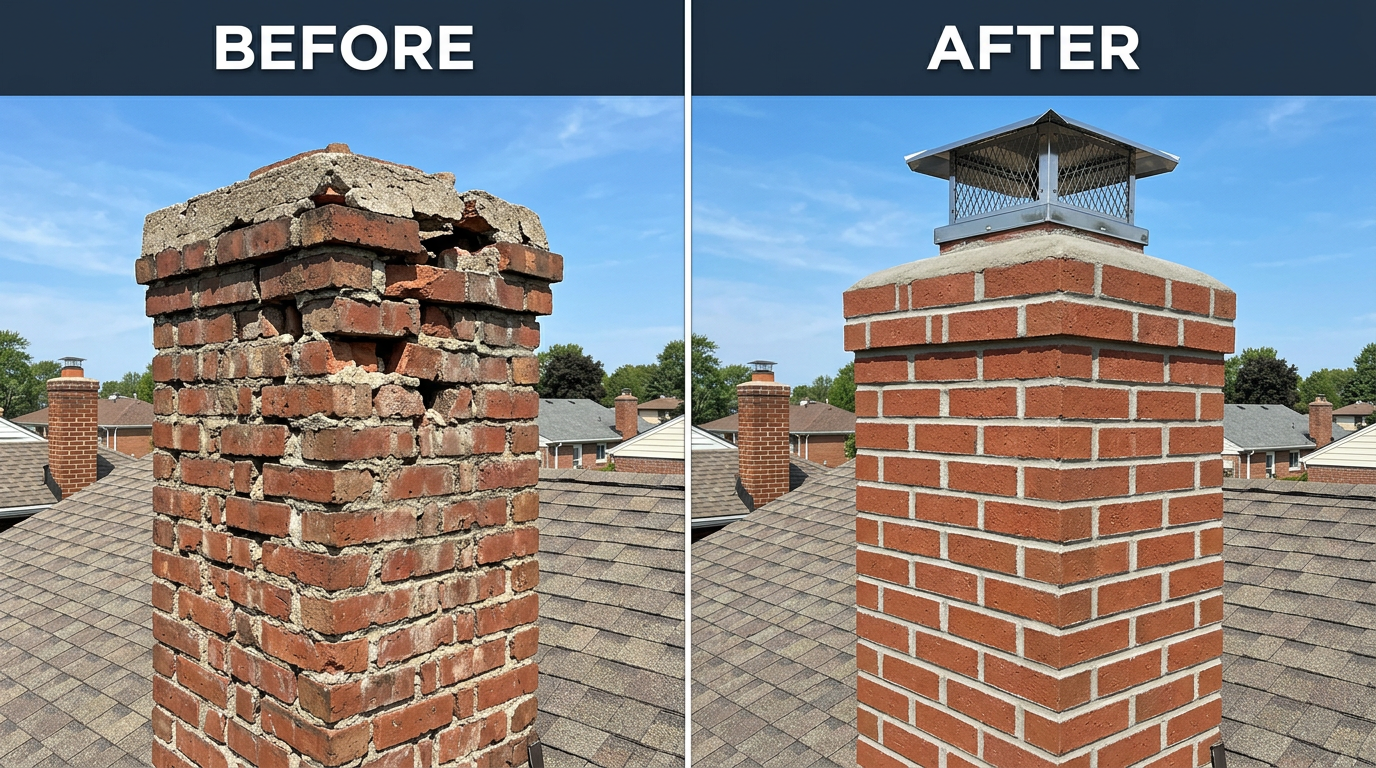
If you notice white, chalky deposits on your chimney's exterior bricks, that's efflorescence—mineral salts left behind when water evaporates from the masonry. While the staining itself is harmless, it's a clear indicator that water is penetrating your bricks. In Wilmington's climate, where freeze-thaw cycles are common from November through March, this moisture repeatedly expands and contracts inside the masonry, accelerating deterioration from the inside out. Left unchecked, efflorescence leads to spalling bricks, crumbling mortar, and eventual structural failure.
2. Crumbling or Missing Mortar Joints
Take a close look at the mortar joints between your chimney bricks. Do you see gaps, cracks, or areas where the mortar has crumbled away? Mortar joints naturally deteriorate over time—typically lasting 20-30 years depending on exposure and quality. When mortar fails, water enters the chimney structure, weakening the entire system. Professional tuckpointing—removing damaged mortar and replacing it with fresh, properly mixed mortar—restores structural integrity and can extend your chimney's life by decades.
3. Damaged or Cracked Chimney Crown
The chimney crown is the concrete or mortar cap that seals the top of your chimney around the flue. Cracks in the crown allow water to flow directly into the chimney structure, bypassing all other protective barriers. We frequently see Wilmington chimneys with crowns that were improperly constructed using standard mortar instead of weather-resistant crown material, making them especially vulnerable to our harsh New England weather. A properly built crown should extend at least 2 inches beyond the chimney walls and include a drip edge.
4. Rusted Firebox, Damper, or Components
Rust on any metal chimney component—damper, firebox panels, or cap—is a telltale sign of excessive moisture inside the chimney system. This usually points to a compromised flue liner, missing or damaged cap, or failed waterproofing. If your damper is difficult to open or won't seal properly due to rust, it's time for professional assessment.
5. Spalling Bricks (Popping or Flaking)
When the faces of your chimney bricks begin to pop off, flake, or crumble, that's spalling—and it's a serious warning sign. Spalling occurs when water trapped inside the brick expands during freezing. Once spalling begins, it accelerates quickly as newly exposed surfaces absorb even more moisture. Individual spalled bricks can be replaced, but widespread spalling may indicate the need for a partial or complete chimney rebuild.
6. Smoke Entering Your Home
If smoke regularly backs up into your living space when you use the fireplace, something is wrong with your chimney's draft system. Possible causes include a blocked flue (from debris, animal nests, or excessive creosote), a damaged or improperly sized liner, a malfunctioning damper, or structural issues affecting the chimney's draw. This isn't just an inconvenience—it means dangerous combustion gases, including carbon monoxide, may be entering your home.
7. Visible Chimney Leaning or Tilting
A chimney that appears to lean away from your home is a serious structural concern requiring immediate professional evaluation. This can result from foundation issues, deteriorated mortar joints, or damage from severe weather events. A leaning chimney is a safety hazard that will only worsen over time.
What to Do If You Spot These Signs
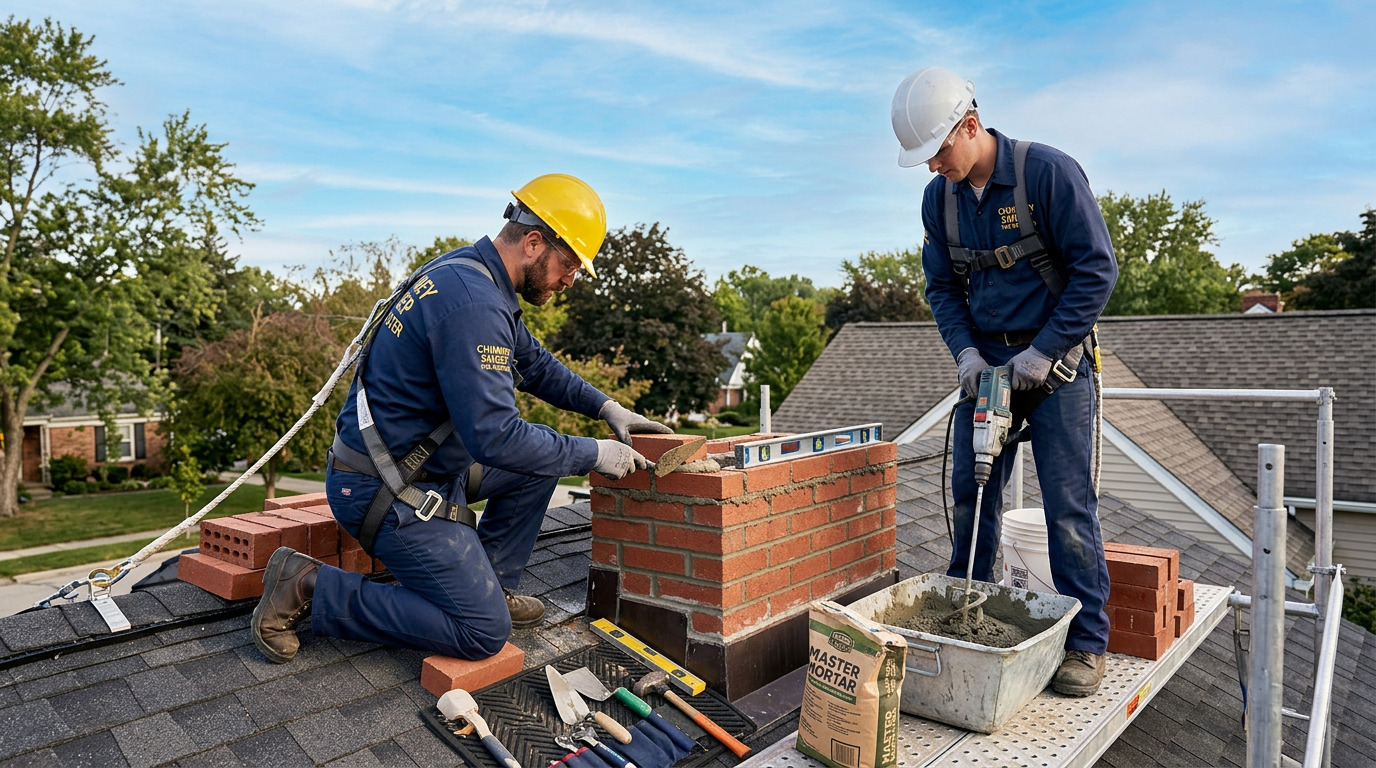
If you notice any of these warning signs on your Wilmington home's chimney, don't panic—but don't ignore them either. Most chimney problems are far less expensive to fix when caught early. Our free inspection and estimate service lets you understand exactly what's needed without any obligation. We provide detailed written reports with photos, transparent pricing, and honest recommendations.
See any of these signs? Call Chimney Sweep The Master at (978) 229-0036 for professional chimney repair in Wilmington, MA. We offer same-day assessments for urgent concerns.

Emily Watson
Fireplace Safety Expert
CSIA-certified professional with 8 years of chimney service experience nationwide.